Let’s face it—iPhones aren’t cheap. You’re carrying around a small fortune in your pocket, and one accidental drop could cost you hundreds in screen repairs. That’s why having a high-quality iPhone screen protector isn’t just smart—it’s essential. Whether you’ve got the newest iPhone 16 Pro Max or you’re still rocking your trusty iPhone 15 Pro, investing in a reliable screen protector is one of the smartest decisions you can make to protect your device.
Now, here’s the thing—not all screen protectors are created equal. Some offer basic scratch protection. Others come packed with features like anti-glare finishes, privacy filters, and shatter resistance. And with every new iPhone release, the screen design changes just enough that your old protector won’t cut it anymore. That’s why we’re breaking it all down for you.
In this ultimate guide, we’ll explore everything from why you need a screen protector in the first place, to the best options available for every iPhone model, including the iPhone 16 and 15 series. We’ll also cover installation tips, product comparisons, and frequently asked questions to help you make the right purchase without any regrets.
By the end of this guide, you’ll know exactly what type of screen protector fits your needs and where to get the best value for your money. Let’s dive in.
Why You Need an iPhone Screen Protector
We get it—modern iPhones use Ceramic Shield or Gorilla Glass. They’re built tough. But they’re not invincible. If you’ve ever dropped your phone from waist height only to pick it up and see a nasty crack or scratch, you know the feeling. That’s where screen protectors come in.
The High Cost of iPhone Screen Repairs
Repairing a cracked screen can set you back anywhere between $200 to $400 depending on your iPhone model. Even with AppleCare+, there’s still a deductible. And without coverage? You’re looking at a hefty repair bill. Screen protectors are a small price to pay to avoid those costs entirely.
What Screen Protectors Actually Do
A good screen protector acts as a sacrificial layer between your phone and the harsh outside world. It absorbs impact, resists scratches, and even prevents shattering in some cases. Think of it as your phone’s bodyguard—always on the job, taking the hits so your screen doesn’t have to.
Modern screen protectors aren’t just about protection either. Some reduce glare, others enhance privacy by dimming the screen for side viewers, and many have oleophobic coatings that resist fingerprints and smudges.
Are Screen Protectors Still Relevant in 2025?
Absolutely. As long as your phone screen can crack (and it can), a screen protector is worth it. Even though Apple’s materials are more durable, they’re still glass. A well-made protector ensures that even if you drop your phone or toss it into your bag with keys, your screen remains pristine.
More importantly, with newer models like the iPhone 16 Pro Max pushing $1,200+, screen protectors are a smart, proactive investment in longevity and resale value.
Best iPhone Screen Protectors (General Recommendations)
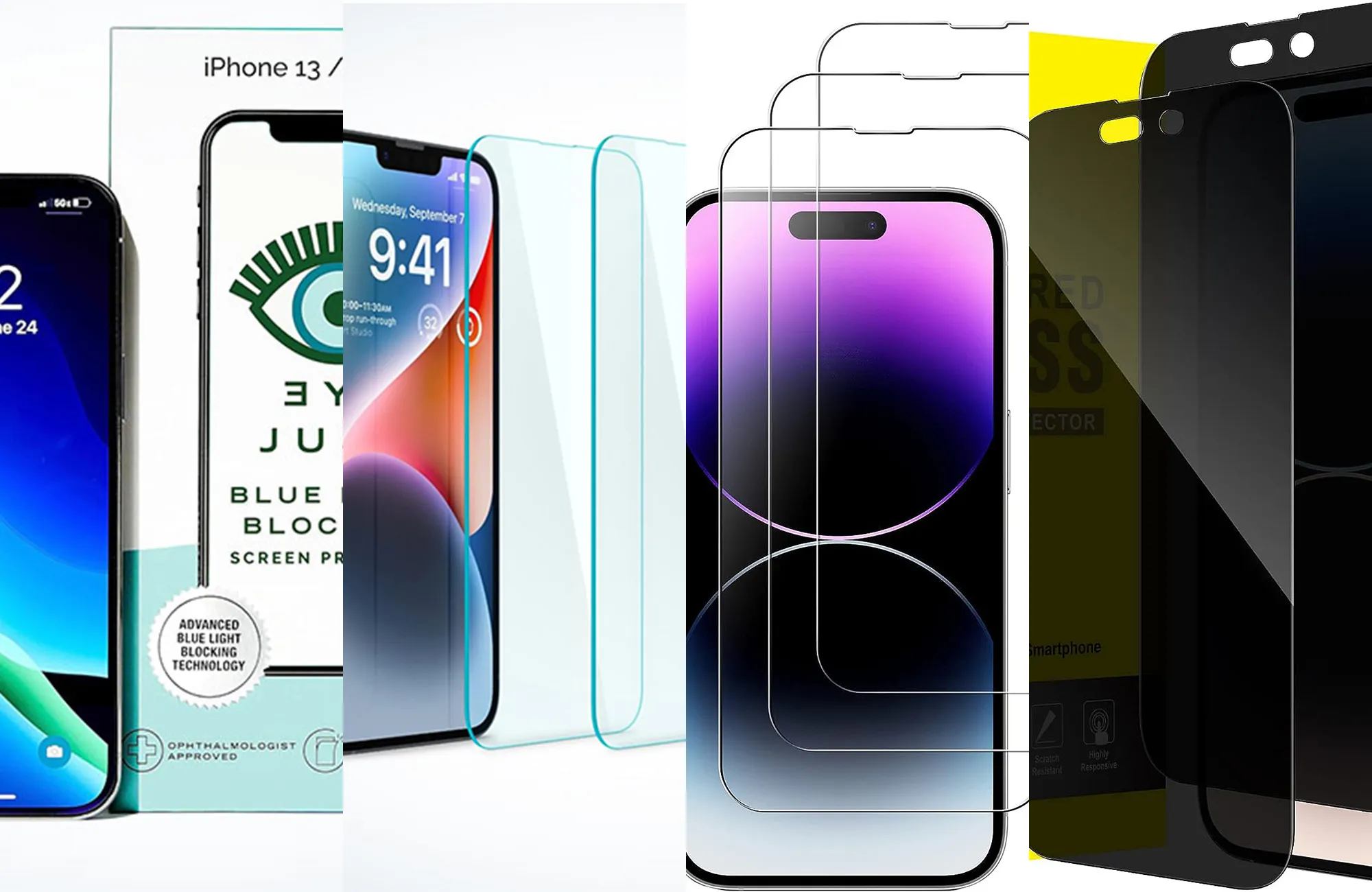
When it comes to choosing a screen protector, you’re looking at four major categories: tempered glass, matte/anti-glare, privacy protectors, and hybrid film. Each type has its pros and cons, and the best one for you depends on how you use your phone.
Tempered Glass Screen Protectors
These are the most popular and for good reason. Tempered glass protectors are thick, clear, and feel just like your phone’s original display. They’re highly durable and offer excellent resistance to drops, scratches, and shattering.
Pros:
- Excellent clarity and touch sensitivity
- Feels like the original screen
- Easy to install without bubbles
- Best protection against drops and cracks
Cons:
- Slightly thicker than film-based protectors
- Can chip or crack if dropped hard (though better the protector than your screen)
Perfect for: Anyone who wants maximum protection without sacrificing screen clarity or responsiveness.
Anti-Glare & Matte Screen Protectors
If you’re always using your phone outdoors, or you hate reflections, anti-glare screen protectors are a game-changer. These matte-finished protectors diffuse light, making your screen easier to read in bright conditions.
Pros:
- Reduces glare and reflections
- Smoother to swipe on (especially with gaming)
- Minimizes fingerprints and smudges
Cons:
- Slightly reduces screen clarity and vibrancy
- Not as tough as tempered glass
Perfect for: Outdoor users, gamers, and anyone who hates smudgy screens.
Privacy Screen Protectors
These are great for commuters, students, or anyone who doesn’t want strangers peeking at their screen. They darken the screen when viewed from an angle, keeping your info private.
Pros:
- Blocks side views up to 30 degrees
- Tempered glass-level protection
- Available for all major iPhone models
Cons:
- Can reduce brightness and clarity
- More expensive than standard glass
Perfect for: Professionals, travelers, and anyone concerned about screen privacy in public.
Hybrid and Film-Based Protectors
These are ultra-thin and flexible, usually made from TPU or PET material. While they don’t offer the same level of drop protection as tempered glass, they’re lightweight and cheap.
Pros:
- Ultra-thin and flexible
- Less noticeable
- Easy to replace
Cons:
- Minimal drop protection
- Prone to scratching
Perfect for: Budget-conscious users or those who want minimal bulk.?
Best Screen Protectors for iPhone 16 Series
With the release of the iPhone 16 lineup, Apple has yet again refined screen technology, offering brighter displays, better responsiveness, and unique size specifications across the models. That means your old screen protector won’t fit—literally and figuratively. Here’s a breakdown of the best screen protectors for each iPhone 16 variant to help you make the right call.
Best for iPhone 16 Standard Model
The standard iPhone 16 has a slightly larger display compared to its predecessor, and a more responsive touchscreen that benefits from ultra-clear and ultra-thin protection.
Top Picks:
- Spigen EZ Fit Tempered Glass: Comes with an alignment tray, making installation foolproof. Crystal-clear visuals and high durability.
- Belkin UltraGlass: Apple Store favorite, engineered with double ion-exchange for strength.
- Supershieldz Anti-Glare Matte Film: Great for users who spend a lot of time outdoors or want a paper-like texture.
Key Features to Look For:
- Precision cutouts for Face ID sensors
- Case-friendly design that doesn’t peel at the edges
- Anti-smudge coating to reduce fingerprints
This model benefits most from tempered glass or matte protectors, depending on your lifestyle—glare-free for readers or photographers, tempered for daily commuters or heavy users.
Best for iPhone 16 Pro
The iPhone 16 Pro’s ProMotion display and ultra-slim bezels mean clarity and responsiveness are top priorities. A poor-quality protector can ruin the Pro-level experience, so don’t skimp here.
Top Picks:
- OtterBox Amplify Glass: Chemically strengthened glass that works beautifully with ProMotion.
- ESR Armorite Screen Protector: 110-lb drop resistance, ultra-thin, and Face ID compatible.
- amFilm OneTouch Glass: Patented installation frame and alignment tool included.
Why It Matters: The 16 Pro is a performance powerhouse, so you’ll want a protector that’s crystal-clear, ultra-responsive, and doesn’t affect touch or Face ID performance.
Best for iPhone 16 Pro Max
The biggest, boldest, and most expensive iPhone deserves top-tier protection. With a 6.9-inch display and the highest pixel density of any iPhone, the screen on the Pro Max needs defense without compromise.
Top Picks:
- ZAGG Glass Elite VisionGuard+: High-impact protection with blue light filter.
- Whitestone Dome Glass: Full adhesive application using UV light—almost like it came with the phone.
- RhinoShield 3D Impact: Shock-resistant yet super-thin, and compatible with Face ID.
Buying Tip: For such a large screen, avoid edge-lift by choosing protectors that are designed with curved-edge coverage or full adhesive properties.
Recommended Brands & Where to Buy
- Amazon: Great for bundles and discounts
- Apple Store: Carries trusted brands like Belkin and OtterBox
- Best Buy: Offers installation services for screen protectors
- Direct from Manufacturers: ESR, Spigen, and Whitestone often offer warranty and return perks
Investing in a quality screen protector for the iPhone 16 series isn’t just about protection—it’s about keeping the premium experience intact.
Best Screen Protectors for iPhone 15 Series
Though not the latest in Apple’s lineup, the iPhone 15 Pro and Pro Max are still high-end devices used by millions. If you’re one of them, or looking to protect your device before reselling or gifting it, here are the best screen protectors tailored to this lineup.
Best for iPhone 15 Pro
The iPhone 15 Pro is known for its titanium frame and brighter screen. A good protector here shouldn’t interfere with display clarity or Face ID functionality.
Top Picks:
- Spigen Glas.tR EZ Fit: Great balance of price, protection, and ease of use.
- Caseology Snap Fit Tempered Glass: Engineered to complement ultra-slim cases.
- amFilm Tempered Glass: Comes in a 3-pack with a super easy alignment tray.
Why Users Love These: Easy installation, long-lasting coating, and smooth touch performance. Avoid overly thick options that may interfere with touch sensitivity.
Best for iPhone 15 Pro Max
With the same display size as the iPhone 16 Pro Max, this device also demands the best in clarity and durability.
Top Picks:
- Belkin UltraGlass 2: Official Apple-endorsed option with superb clarity.
- MagGlass Privacy Shield: Blocks side viewers, ideal for professionals and travelers.
- RhinoShield Impact Flex: Flexible yet strong, and compatible with MagSafe cases.
Key Specs, Features & Pricing Comparison
| Feature | iPhone 15 Pro | iPhone 15 Pro Max |
| Average Protector Price | $10–$25 | $15–$35 |
| Recommended Thickness | 0.33mm – 0.4mm | 0.4mm+ (due to screen size) |
| Case Compatibility | High with slim cases | Choose full-screen models |
| Edge Coverage | Flat or 2.5D preferred | Curved edge a must |
| Privacy Option | Available | Strongly Recommended |
Choosing the right screen protector for your iPhone 15 series ensures continued performance and keeps that resale value high when it’s time to upgrade.
How to Choose the Right iPhone Screen Protector
There are thousands of protectors out there. So how do you choose the right one? Start by thinking about how you use your phone. Then, weigh your options based on protection level, materials, lifestyle, and price.
Tempered Glass vs Plastic Film
Tempered glass is the top-tier choice for most users. It’s durable, feels premium, and protects against drops and scratches. Plastic film, on the other hand, is cheaper and thinner but doesn’t offer the same level of drop protection.
Tempered Glass Pros:
- Shatter-resistant
- Better clarity and feel
- Easier installation with alignment kits
Plastic Film Pros:
- Cheaper
- Less noticeable
- Easier to trim or replace
Go for tempered glass if you want the best all-around protection. Plastic film can work if you’re on a tight budget or need ultra-thin coverage under a rugged case.
Case Compatibility & Face ID Issues
Some thicker screen protectors may lift when used with tight cases. That’s why case-friendly designs are crucial. These leave just a tiny margin on the edge, allowing cases to wrap without pressure.
Face ID Tip: Cheap protectors can block the front-facing sensor or distort facial data. Look for labels like “Face ID compatible” or “Precision cutouts.”
Lifestyle-Based Recommendations
- Gamers: Matte or anti-glare glass for smooth swiping and minimal reflection.
- Business Pros: Privacy screen with side-view dimming.
- Outdoorsy Users: Matte or hybrid protectors that reduce sun glare and smudging.
- Everyday Commuters: Go with durable, case-friendly tempered glass.
Installation & Maintenance Tips
A great protector can still be a pain if not installed properly. Here’s how to make sure you get it right from day one—and keep it in top shape.
How to Install a Screen Protector Without Bubbles
- Clean the screen thoroughly using an alcohol wipe and microfiber cloth.
- Use the dust sticker to pick up any remaining particles.
- Align using an installation frame (many brands now include this).
- Peel and apply slowly, starting from the top and letting gravity do the work.
- Push out any bubbles with the supplied squeegee or a credit card wrapped in cloth.
How Often Should You Replace Your Screen Protector?
- If you notice cracks or chips—replace it ASAP.
- If the screen becomes blurry or less responsive, it’s time for a change.
- In most cases, a good protector should last 6–12 months depending on usage.
Cleaning Tips for Long-Term Use
- Use a soft microfiber cloth and alcohol-free cleaner.
- Avoid using paper towels or abrasive materials—they scratch the protector.
- Store unused protectors in a dust-free ziplock bag if bought in a multipack.
Conclusion
Choosing the right iPhone screen protector is more than just a small accessory decision—it’s about protecting your investment, enhancing usability, and keeping your iPhone looking brand-new for years.
From ultra-clear tempered glass to anti-glare matte finishes and privacy-focused protectors, the options are vast—but now, you know what to look for. Whether you own the latest iPhone 16 Pro Max or a still-powerful iPhone 15 Pro, there’s a perfect screen protector out there for you.
When shopping, prioritize trusted brands, check for compatibility with your model and case, and always look for features like installation guides, lifetime warranties, and Face ID compatibility. And remember, installation is just as important as the product itself—so take your time and follow best practices.
A small investment today can save you hundreds tomorrow. Protect your screen, preserve your experience, and shop smart.
Read our previous Article about Best iPhone 16 Pro & Pro Max Cases
FAQs
Can a screen protector prevent water damage?
No, screen protectors do not waterproof your phone. While some may offer hydrophobic coatings that repel minor splashes, they don’t provide full water resistance. Stick with a waterproof case if that’s your concern.
Will a screen protector interfere with stylus use or Apple Pencil?
Not usually. High-quality tempered glass or matte protectors are compatible with styluses, especially if they’re labeled “Pencil-friendly” or “Stylus-compatible.”
Is it better to have a thinner or thicker screen protector?
Thinner protectors (0.2mm–0.3mm) maintain a more natural feel and are great for responsiveness. Thicker ones (0.4mm+) offer more impact resistance but may affect touch slightly.
Can I reuse a screen protector if I remove it?
Most protectors—especially tempered glass—aren’t designed to be reused. Once removed, dust and adhesive degradation make reinstallation risky. Some flexible film protectors may be reusable once or twice if handled carefully.
What’s the best protector for kids’ iPhones?
Look for thick, shatterproof tempered glass with rounded edges and high-impact resistance. Combine it with a shockproof case for ultimate kid-proofing.
Do Screen Protectors Really Work?
Yes, they absolutely do. While no screen protector can make your phone indestructible, high-quality protectors can:
- Absorb shocks from drops and impacts
- Prevent scratches from keys, coins, and sand
- Reduce the chance of screen cracks in minor falls
- Act as a barrier against oils and dirt
Many users report dropping their phone only to find the screen protector shattered—while the screen underneath remained untouched. That’s a win in any scenario.
Are Expensive Protectors Better?
Price isn’t everything, but it often reflects quality and extra features. Higher-end protectors:
- Use better materials like double-strengthened tempered glass
- Come with installation kits and lifetime warranties
- Include specialty coatings (blue light filter, oleophobic layer, privacy filters)
That said, there are affordable brands like amFilm, JETech, and ESR that offer superb quality under $15. Just read reviews, ensure compatibility, and avoid unbranded bulk packs that lack support.
Can I Use a Case with a Screen Protector?
Absolutely—and you should. Most modern screen protectors are “case-friendly,” meaning they leave a slight gap along the edges to allow a snug fit with phone cases.
Tips for compatibility:
- Don’t buy full-coverage protectors unless they explicitly say “case compatible”
- Use edge-alignment tools during installation to avoid overlap
- Choose flexible TPU protectors if you’re using rugged or tight-fit cases
Pairing both a case and a screen protector offers full 360° protection for your phone.
Are Matte Protectors Good for Gaming?
Yes—matte protectors are a secret weapon for mobile gamers. Their smooth texture reduces friction, allowing for faster finger glide during rapid gameplay. Plus, they reduce glare from overhead lights and minimize fingerprints.
However, they can slightly reduce color vibrancy. If you’re playing games with rich visuals or need true-to-life color accuracy (like in AR apps or photography tools), opt for ultra-clear tempered glass instead.
Does the Protector Affect Screen Clarity or Touch Sensitivity?
This depends entirely on the type and quality of the protector. Cheap protectors often reduce clarity, add rainbow effects, or interfere with touch accuracy.
Premium protectors, on the other hand:
- Maintain 99.9% transparency
- Include oleophobic coatings that feel like the native screen
- Are ultra-thin (0.3mm or less) to preserve responsiveness
Pro Tip: If Face ID isn’t working well after installation, double-check that the cutout isn’t blocking the TrueDepth sensor.
Please don’t forget to leave a review.